

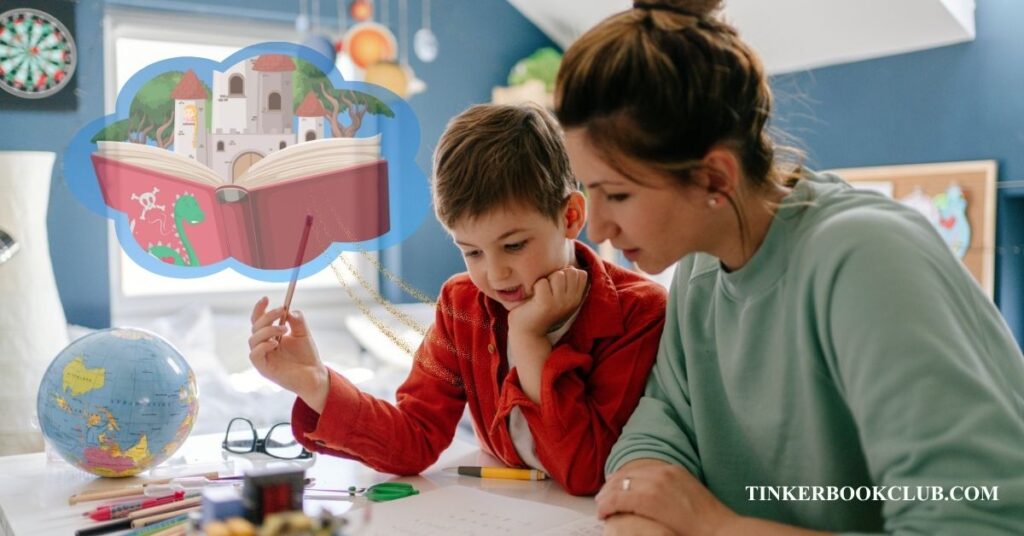
Fairy tales have a kind of magic that never fades. They’ve been shared for generations. They’re filled with adventure, kindness, and a dash of mystery. But beyond their charm, fairy tales are also one of the easiest and most effective ways to teach story elements to children.
Whether you’re teaching in a classroom, homeschooling, or running your own book club, fairy tales five young readers a familiar and engaging way to explore characters, setting, conflict, resolution, and theme. These are the very building blocks of good storytelling.
Table of Contents
ToggleWhy Fairy Tales Work So Well for Teaching Story Elements
Fairy tales naturally follow a simple and predictable story pattern.
That makes them perfect for introducing story structure:
- There’s always a main character (often a hero or heroine).
- A problem or challenge drives the story forward.
- A magical helper or friend often appears to guide the hero.
- The villain creates conflict and tension.
- And by the end, a lesson or theme ties everything together.
Because most children already know the stories, they can focus on identifying how each element fits together. Instead of getting lost in unfamiliar plots or tricky vocabulary, they can easily see the separate components and how they work together.
Step 1: Start with a Familiar Tale
Begin with a fairy tale or folk tale your students already know and love. Something like Cinderella, The Three Little Pigs, or Little Red Riding Hood.
After reading (or listening to) the story, ask:
- Who is the main character?
- What problem do they face?
- What is the setting (where and when does it happen)?
- How is the problem solved?
- What lesson or theme does the story teach?
You can record answers together on a story map or use a graphic organizer to make each element visual and easy to remember.
Step 2: Compare Versions of the Same Fairy Tale
Once your students understand the basic structure, try comparing two versions of the same tale.
For example:
- The Three Little Pigs vs. The True Story of the Three Little Pigs
- Cinderella vs. Yeh-Shen (a Chinese Cinderella story)
Ask your learners:
- What parts stay the same?
- How do the characters, problems, or solutions change?
- What new themes can we discover?
Comparing versions builds critical thinking skills and helps kids see how story elements can shift across cultures while keeping the heart of the story intact.
Step 3: Story Element Sorting
Create a simple sorting activity to help kids match story details to the correct elements.
You can use printed cards, a worksheet, or digital slides with categories like:
- Character
- Setting
- Problem
- Solution
- Theme
Then, list details from the fairy tale for students to sort.
Example:
- “A girl loses her glass slipper”–Problem
- “A kingdom long ago”–Setting
- “Cinderella”–Main Character
Sorting helps kids internalize story structure through play.
Step 4: Retell or Rewrite a Fairy Tale
Practice telling back the story as it’s written. Then encourage your learners to retell or rewrite a fairy tale with a creative twist!
Try prompts like:
- What if it took place today instead of “once upon a time”?
- What if it happened under the sea or in outer space?
- What if the solution in the story didn’t work? What other ways could the problem be solved?
Step 5: Extend Learning Through Art and Play
Fairy Tales come alive when kids can act them out. Try adding:
- Puppet shows or dramatic retellings
- Story sequencing cards
- Drawing or illustrating scenes
These playful extensions help reinforce story structure while keeping learning joyful.
Final Thoughts
Fairy tales follow predictable patterns and are a good way to introduce story elements to children. By using stories your students already love, you’ll help them understand the framework of good storytelling in a way that feels magical and fun.
If you enjoyed this post, you might also like 👉 The Three Little Pigs Origin Story: From Folk Tale to Fairy Tale
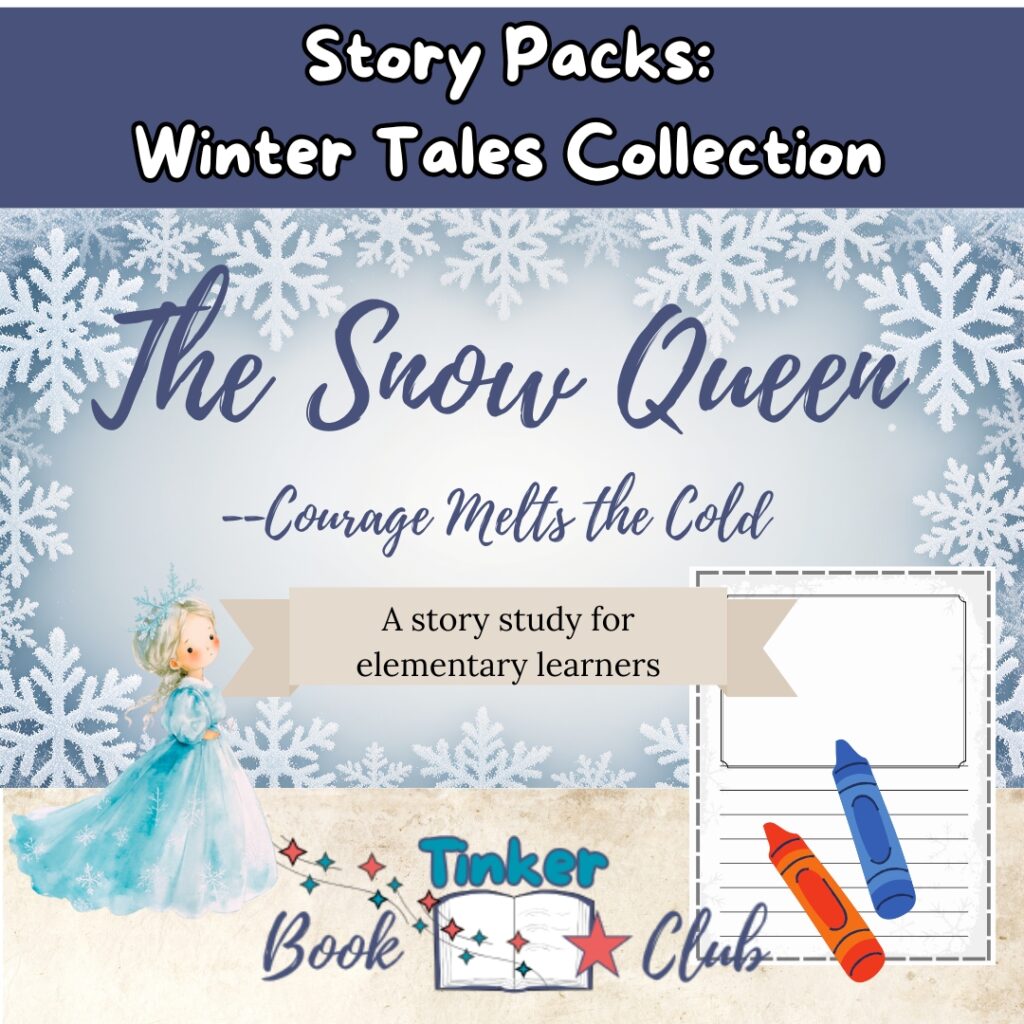
Want to try story discussion, story mapping, matching character & setting, learning about symbols, writing and drawing prompts, retelling with puppets, creative art extensions, and more? You may like my Story Pack for the fairy tale The Snow Queen by Hans Christian Andersen.
See the details now in my Teachers Pay Teachers store.
Want to bring these stories to life in your home or classroom? Join the Tinker Book Club mailing list for free guides, discussion ideas, and book club printables.

Thanks for listening, friends!