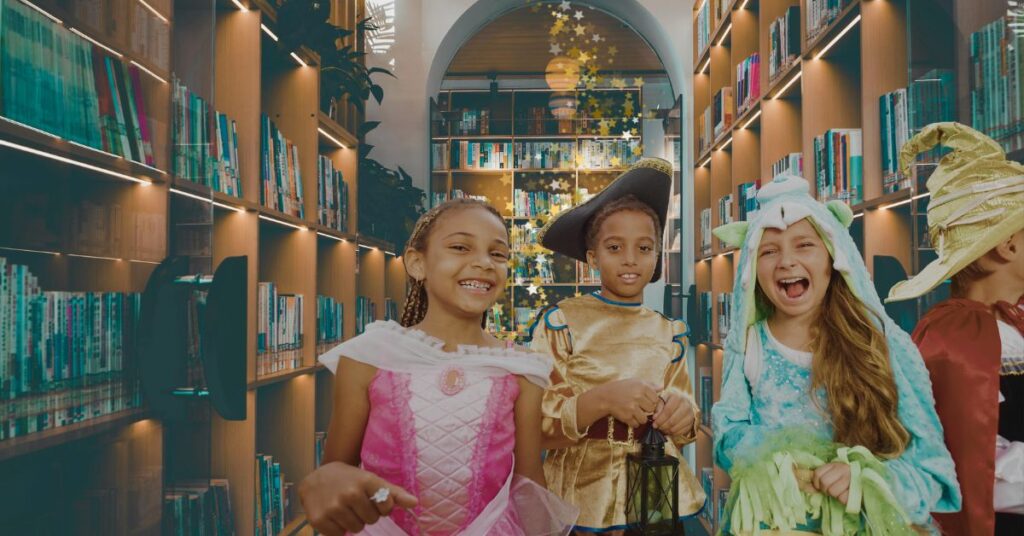


There is something uniquely powerful about reading fantasy together.
Fantasy books for homeschool (especially in a book club setting) can invite children to imagine boldly, think symbolically, and wrestle with big ideas in a safe environment. And while many families search for fantasy books for homeschool, what they’re often really looking for is something deeper: books that spark rich conversation and shared wonder.
If you’re running (or hoping to start) a homeschool book club built around classic literature, fantasy is one of the most rewarding genres to explore. Beginning with fairy tales and gradually moving into beloved chapter books can be a solid start on the path forward in your literary reading life.
Let’s walk through how to build a meaningful fantasy-focused homeschool book club, one stage at a time.
Table of Contents
ToggleWhy Fantasy Works So Beautifully in Homeschool Book Clubs
Fantasy naturally lends itself to discussion.
Because the worlds are imagined, children must actively engage their minds to picture settings, interpret symbols, and understand character choices. In a homeschool book club, that imaginative work becomes a community activity.
The best fantasy books for homeschool settings offer:
- Clear themes of courage, sacrifice, loyalty, and growth
- Memorable settings that invite visualization
- Moral complexity without heavy-handed preaching
- Opportunities for thoughtful narration and reflection
Fantasy has great potential to deepen serious learning.
Stage One: Fairy Tales as the Foundation
Every strong fantasy book club can begin with classic fairy tales.
Fairy tales are short, symbolic, and layered. They teach children how to listen for meaning beneath the surface. In many ways, they are the training ground for longer fantasy works.
In a fantasy focused homeschool book club, fairy tales help children practice:
- Narration (retelling in their own words)
- Identifying patterns and archetypes
- Noticing transformation and growth
- Asking “wonder” questions
Before moving into longer fantasy books for homeschool reading, it’s worth lingering their (even with older children).
Stage Two: Bridge Books & Illustrated Fantasy
Once children are comfortable discussing shorter tales, you can gradually introduce early fantasy chapter books or illustrated classics.
Look for fantasy books for homeschool groups that are:
- Rich in imagery but manageable in length
- Readable aloud across mixed ages
- Thematically meaningful
Titles like:
- The Wind in the Willows
- The Princess and the Goblin
- The Borrowers
These stories retain fairy tale sensibilities while gently expanding plot complexity and character development.
In your homeschool book club, consider:
Weekly reading assignments
- Oral narration
- Open-ended reflection questions
- Occasional map-drawing or scene illustration
Again, the emphasis is conversation, not curriculum overload.
Stage Three: Classic Fantasy Chapter Books
A your group matures, you can move into longer, more layered fantasy novels.
When families search for fantasy books for homeschool, they often mean enduring classics like:
- The Lion, the Witch, and the Wardrobe
- The Hobbit
- A Wrinkle in Time
These novels rewards slow, thoughtful reading. They are ideal for homeschool book clubs because they invite:
- Theological and philosophical discussion
- Symbol interpretation
- Character arc analysis
- Cross-book comparisons
Rather than rushing through, consider pacing these over several weeks and protecting time for rich discussion.
Fantasy thrives when it’s talked about.

How to Structure a Fantasy Homeschool Book Club
No matter the age level, the rhythm can remain beautifully simple:
- Read (aloud together or independently, at home or at book club)
- Narrate
- Wonder
- Discuss
In a fantasy book club, discussion questions might include:
- What kind of world is this author creating?
- What rules govern this world?
- Which character changed the most?
- What does this story suggest about courage or sacrifice?
The key is allowing space. Fantasy worlds are expansive. Your conversations can be, too.
Keeping It Manageable (Especially for Overwhelmed Moms)
It’s easy to assume that fantasy book clubs require elaborate themed parties, crafts, and projects.
They don’t.
The most meaningful book clubs centered around fantasy books for homeschool families often involve:
- A consistent meeting time
- A shared snack
- A stack of well-loved books
- Thoughtful questions
If you have the bandwidth for maps, art, or themed gatherings, that’s wonderful! If not, shared reading is enough.
Building a Fantasy Rich Book Club Culture
If you’re just beginning, start small:
- Choose one fairy tale
- Build a short discussion around it
- Repeat consistently
Over time, your homeschool book club can naturally grow from fairy tales to beloved fantasy chapter books.
At Tinker Book Club, we believe that classic stories are best experienced in community. Whether you’re gathering siblings around your table or hosting a small group of fellow bookish homeschoolers, you’re building something lasting.
And it begins with a single story.
An Invitation
If you’re building or refining a homeschool book club centered on classic books, discussion doesn’t have to feel complicated or scripted.
At Tinker Book Club, I share tools, prompts, and ideas to help you lead thoughtful, low-pressure books discussions that honor both literature and childhood.
If you’d like more resources like these (discussion prompts, book club structures, and classic-book centered learning ideas) I’d love to invite you to join my newsletter.
Sign up to receive bookish encouragement, seasonal ideas, and practical support for running a meaningful kids’ book club at home. 👇

If you enjoyed this post, you might also like 👉 Best Classic Books About Friendship for Kids
Thanks for listening, friends!