


Running a kids’ book club (especially one with a foundation of classic literature) can feel so rewarding… and a little intimidating. You want meaningful conversations, but you don’t want it to feel like a quiz. You want depth, but you also want kids to actually talk.
That’s where friendship discussion questions come in.
Friendship is one of the most universal themes in children’s literature. From timeless classics to modern stories, characters wrestle with loyalty, misunderstanding, kindness, jealousy, and forgiveness. And often in ways that feel very close to children’s real livesw.
The good news? You don’t need a different discussion guide for every book. With the right set of open-ended friendship discussion questions, you can lead rich conversations for any story. Especially in homeschool book clubs built around classic books.
Table of Contents
ToggleWhy focus on Friendship in Book Club Discussions?
Friendship is a developmentally meaningful topic for kids of all ages. It’s concrete to grasp, yet complex enough to grow with them.
Using friendship as a recurring discussion theme helps children:
- Practice empathy and perspective-taking
- Reflect on their own relationships
- Make personal connections to literature
- Participate more confidently in group discussion
For homeschoolers, running mixed-age book clubs, friendship discussion questions are especially powerful because they invite multiple levels of response. These can be anything from simple observations to deeper reflection.
How to Use Friendship Discussion Questions in a Book Club Setting
Before we dive into the questions themselves, a gentle reminder:
- You don’t need to ask every question.
- Perfect answers aren’t required.
- Sometimes children need to be able to interpret things on their own, at their own level. Even if they don’t get it all the first time.
Choose 3-5 questions, read them aloud slowly, and allow space for thinking. Silence is okay. Rambling answers are okay too. The goal is conversation, not completion.
Friendship Discussion Questions for Any Book
These friendship discussion questions are intentionally broad so they can be used with picture books, chapter books, and classic literature alike.
Understanding the Friendship
- Who are the friends in this story?
- How did their friendship begin or change?
- What do the characters enjoy doing together?
Challenges & Conflict
- Did the friends ever disagree or hurt each other?
- What caused the conflict between them?
- How did each character respond when things felt hard?
Choices & Character
- Did any character have to choose between friendship and something else?
- Were there moments of loyalty or betrayal?
- What choices helped the friendship? What choices hurt it?
Feelings & Perspective
- How do you think each friend felt during the story?
- Did any character feel left out, misunderstood, or lonely?
- How might the story have changed if a character had spoken up sooner?
Growth & Resolution
- Did the friendship change by the end of the book?
- What helped repair or strengthen the relationship?
- Do you think the characters learned something about friendship?
Personal Connection
- Have you ever felt like one of the characters?
- What kind of friend would you like to be?
- Is there something from this story you’d like to try in your own friendships?
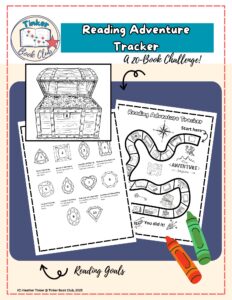
If you’d like to help motivate your kids to reach their reading goals, you can grab my free printable reading tracker.
It’s simple, kid-friendly, and perfect for any reading level.👇
Why These Questions Work for Classic Books
Classic children’s literature often moves at a slower pace and leaves more time for thinking deeply. That’s actually a gift in a book club setting.
Open-ended friendship discussion questions:
- Help children upack older language and social norms
- Invite narration rather than right-or-wrong answers
- Encourage children to read between the lines
- Support gentle SEL learning without feeling forced
This approach aligns beautifully with literature-rich homeschooling philosophies and keeps the focus on ideas, not worksheets.
Tips for Leading Friendship Discussions with Kids
A few practical reminders for homeschool book club leaders:
- Let children answer each other, not just you
- Rephrase responses instead of evaluating them
- Allow kids to pass if they’re not ready to speak
- Model curiosity
Often, the most meaningful connections will come much later when life events bring a story to their memory. They’ll be able to recall perspective and inspiration from the experiences they gained through the stories they read and loved.
An Invitation
If you’re building or refining a homeschool book club centered on classic books, discussion doesn’t have to feel complicated or scripted.
At Tinker Book Club, I share tools, prompts, and ideas to help you lead thoughtful, low-pressure books discussions that honor both literature and childhood.
If you’d like more resources like these (discussion prompts, book club structures, and classic-book centered learning ideas) I’d love to invite you to join my newsletter.
Sign up to receive bookish encouragement, seasonal ideas, and practical support for running a meaningful kids’ book club at home. 👇

If you enjoyed this post, you might also like 👉 Best Classic Books About Friendship for Kids
Thanks for listening, friends!