


Homeschool reading can sometimes feel like a balancing act–especially when we feel pressure to turn every story into a lesson. It’s easy to pause for vocabulary, point out character traits, or turn a chapter into a mini literature activity. But here’s the surprising truth: you don’t have to turn every book into a structured lesson to give your child a rich, meaningful reading life.
Some of the deepest learning happens in the spaces where we let stories breathe.
Table of Contents
ToggleThe Pressure to "Make Everything Educational" in Homeschool Reading
As homeschooling parents, it’s almost instinctive to look for t he learning tucked inside every beautiful book. You notice themes. You see chances to discuss setting or characterization. You find perfect moments to teach a skill.
Nothing is wrong with that instinct. But not every story moment needs to become a lesson. And not every book needs to “teach something” in order to matter.
In fact, stepping back often leads to more powerful learning.
The Importance of Letting Kids Simply Enjoy Books
Children don’t just process stories with their minds. They absorb them with their hearts, imaginations, and senses. When we refrain from turning every page into a mini assignment, we give kids space for something incredibly valuable.
The quiet percolation.
This is where:
- Connections form naturally
- Story elements sink in without being forced
- Emotions are processed gently
- Meaning grows slowly in the background.
This kind of internal, intuitive learning can’t be measured or scheduled. It thrives in the gaps.
A gentle homeschool reading approach values this slow, deep, behind-the-scenes growth.
Why Not Every Story Needs to Be a Lesson (Even in Homeschool Language Arts)
Parents sometimes worry that if they’re not actively teaching, they’re missing learning opportunities. But the opposite is often true.
1. Kids learn more when reading feels good.
When reading feels like a chore, the brain shifts into “performance mode,” focusing on doing it right instead of absorbing the story. But when a child is relaxed, comfortable, and emotionally open, the brain literally processes more deeply. Warm, cosy read-alouds create a sense of safety. And safety opens the door to real lasting learning.
A book that feels good becomes a book they return to, think about, and remember. That’s the foundation of lifelong literacy.
2. Low-pressure reading leads to richer discussions.
The best conversations rarely happen in the moment. They come later (sometimes days later!) when a child suddenly makes a connection or recalls a scene that stuck with them.
When you’re not constantly pausing a story to “catch the teachable moment,” you give them space to digest what they’ve heard. And that digestion is where reflection happens.
Children will often bring up themes, emotions, or questions on their own. These spontaneous conversations are deeper, more honest, and far more developmentally meaningful than forced comprehension checks.
3. Deep thinking takes time to emerge.
Children don’t always talk about what they’re learning. but that doesn’t mean they aren’t processing. Some kids verbalize immediately. Others need time to quietly replay events in their minds.
Given enough space, their brains begin doing invisible work:
- noticing patterns
- comparing characters
- predicting outcomes
- recalling similar stories
- connecting events to their own lives
This kind of meaning-making can’t be rushed. It often happens while they’re playing, drawing, or falling asleep, long after the book is closed. A relaxed reading rhythm gives them the time their minds need to make these deeper connections.
4. Wonder fuels curiosity.
Wonder is the spark that invites a child to explore a topic further, ask questions, or look for similar stories. It’s also one of the most overlooked parts of literacy.
When a child feels delight, surprise, suspense, or emotional resonance, you’re nurturing:
- imagination
- empathy
- language development
- curiosity-driven learning
Trying to turn every moment into a lesson can actually smother that spark. But leaving space for wonder allows a child’s natural love of learning to grow. And that inner curiosity is far more powerful than any worksheet or analysis.

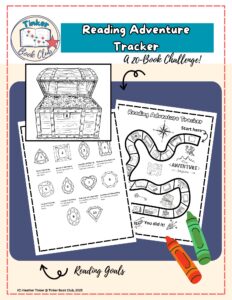
If you’d like to help motivate your kids to reach their reading goals, you can grab my free printable reading tracker.
It’s simple, kid-friendly, and perfect for any reading level.
Creating a Family Culture of Stories, Not Assignments
Some of the most meaningful learning comes from unstructured moments.
- reading aloud before bedtime
- sharing morning basket stories
- listening to audiobooks in the car
- enjoying picture books just because
- laughing together through a favorite chapter
When kids associate reding with safety, connection, and delight, they naturally build comprehension, vocabulary, empathy, and story sense.
This is the heart of a relaxed, homeschool reading rhythm.
When to Add in Activities or Story Element Lessons
There are wonderful moments to go deeper. Your child may be excited, curious, or asking questions. They could make an observation that leads to a relevant discussion. You can sprinkle in activities to build exposure to literary terms and concepts without being heavy handed.
Maybe you want to:
- explore characters
- map out a fairy tale
- do a creative retelling
- analyze setting or theme
- use story cards or puppets
These can absolutely enrich a story. Especially when they enhance the experience, not replace joy.
That’s exactly what Tinker Book Club resources are designed for: gentle, optional activities that support your reading life without overwhelming it.
A Balanced Approach to Homeschool Reading
If you want your children to develop
- strong comprehension
- natural vocabulary
- a sense of story structure
- imagination
- emotional insight
- and a lifelong love of books
you don’t need to extract a lesson from every chapter.
You simply need to share stories.
Let meaning grow slowly. Let stories breathe. Let books be enjoyed as books. Your child’s mind will do the rest.
If you enjoyed this post, you might also like 👉 Simple, Gentle Ways to Encourage Reluctant Readers.
Want to bring stories to life in your home or classroom? Join the Tinker Book Club mailing list for free guides, discussion ideas, and book club printables.

Thanks for listening, friends!